World Journal of Emergency Medicine ›› 2021, Vol. 12 ›› Issue (2): 131-136.doi: 10.5847/wjem.j.1920-8642.2021.02.008
• Original Article • Previous Articles Next Articles
 Open Access
Hao-tian Chen1, Jian-feng Xu2, Xiao-xia Huang1, Ni-ya Zhou3, Yong-kui Wang4, Yue Mao5( )
Received:2020-10-10
Revised:2020-02-03
Online:2021-04-01
Published:2021-04-10
Hao-tian Chen, Jian-feng Xu, Xiao-xia Huang, Ni-ya Zhou, Yong-kui Wang, Yue Mao. Blood eosinophils and mortality in patients with acute respiratory distress syndrome: A propensity score matching analysis[J]. World Journal of Emergency Medicine, 2021, 12(2): 131-136.
Add to citation manager EndNote|Ris|BibTeX
URL: http://wjem.com.cn/EN/10.5847/wjem.j.1920-8642.2021.02.008
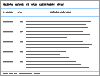
Table 1
Comparisons of baseline characteristics between survivors and non-survivors
| Variables | Total (n=2,567) | Survivors (n=1,946) | Non-survivors (n=621) | P |
|---|---|---|---|---|
| Age (years) | 63.35 (51.39-75.98) | 62.14 (50.38-74.55) | 68.02 (55.20-79.44) | <0.001 |
| Male, n (%) | 1,479 (57.62) | 1,127 (57.91) | 352 (56.68) | 0.589 |
| Weight (kg) | 81.1 (68.0-97.1) | 82.3 (70.0-98.2) | 77.9 (64.1-92.3) | <0.001 |
| BMI (kg/m2) | 27.91 (24.13-32.91) | 28.23 (24.41-33.09) | 27.08 (22.79-31.98) | <0.001 |
| Heart rate (beats per minute) | 88.37 (78.89-98.47) | 88.05(78.96-97.69) | 89.68 (78.90-100.89) | 0.028 |
| MAP (mmHg) | 77.25 (71.92-84.17) | 77.79 (72.30-84.17) | 75.85 (70.74-84.51) | 0.073 |
| PaO2/FiO2 ratio | 237.83 (193.89-289.95) | 239.17 (194.67-291.77) | 232.50 (191.42-279.47) | <0.001 |
| Comorbidities, n (%) | ||||
| Diabetes | 728 (28.36) | 562 (28.88) | 166 (26.73) | 0.301 |
| Sepsis | 1,584 (61.71) | 1,165 (59.87) | 419 (67.47) | 0.001 |
| Severity of illness | ||||
| SAPS II | 44 (35-55) | 42 (33-52) | 53(44-64) | <0.001 |
| ARDS severity, n (%) | ||||
| Mild | 379 (14.76) | 305 (15.67) | 74 (11.92) | <0.001 |
| Moderate | 1,023 (39.85) | 816 (41.93) | 207 (33.33) | |
| Severe | 1,165 (45.38) | 825 (42.39) | 340 (54.75) | |
| Laboratory data | ||||
| WBC (×109/L) | 12.8 (8.8-18.1) | 12.5 (8.8-17.5) | 14.0 (8.9-19.4) | 0.003 |
| RBC (×109/L) | 3.58 (3.10-4.10) | 3.59 (3.11-4.11) | 3.54 (3.06-4.07) | 0.133 |
| PLT (×109/L) | 201 (139-276) | 202 (144-270) | 197 (118-294) | 0.056 |
| Lactate (mmol/L) | 2.1 (1.4-2.7) | 2.0 (1.3-2.5) | 2.5 (1.7-3.8) | <0.001 |
| EOS counts initial (×109/L) | 0.2 (0-1.0) | 0.3 (0-1.0) | 0.1 (0-0.6) | <0.001 |
| EOS counts minimum (×109/L) | 0.2 (0-0.9) | 0.2 (0-1.0) | 0.1 (0-0.4) | <0.001 |
| EOS counts maximum (×109/L) | 0.4 (0-1.2) | 0.5 (0.1-1.3) | 0.2 (0-1.0) | <0.001 |
| pH | 7.35 (7.28-7.42) | 7.36 (7.29-7.42) | 7.33 (7.26-7.41) | <0.001 |
| Mechanical ventilation | ||||
| Tidal volume (mL/kg PBW) | 6.65 (5.41-8.04) | 6.56 (5.35-7.95) | 6.85 (5.63-8.21) | 0.001 |
| Minute ventilation (L/min) | 9.8 (8.0-12.4) | 9.6 (7.9-12.0) | 10.4 (8.3-13.8) | <0.001 |
| Low tidal volume, n (%) | 1,167 (45.46) | 910 (46.76) | 257 (41.38) | 0.019 |
| Drug usage, n (%) | ||||
| Corticosteroid use | 436 (16.98) | 276 (14.18) | 160 (25.76) | <0.001 |
| Vasopressor use | ||||
| No vasopressor | 1,765 (68.76) | 1,442 (74.10) | 323 (52.01) | <0.001 |
| One vasopressor | 512 (19.95) | 338 (17.37) | 174 (28.02) | |
| Two vasopressors | 290 (11.30) | 166 (8.53) | 124 (19.97) | |
| Antibiotics use | 2,208 (86.01) | 1,677 (86.18) | 531 (85.51) | 0.308 |
Table 2
Comparisons of outcome characteristics between the EOS counts <2% and EOS counts ≥2% groups
| Variables | Total (n=2,567) | Patients who used corticosteroids (n=436) | Patients who did not use corticosteroids (n=2,131) | ||||||
|---|---|---|---|---|---|---|---|---|---|
| EOS counts <2% (n=2,110) | EOS counts ≥2% (n=457) | P | EOS counts <2% (n=389) | EOS counts ≥2% (n=47) | P | EOS counts <2% (n=1,721) | EOS counts ≥2% (n=410) | P | |
| 28-day mortality, n (%) | 536 (25.40) | 85 (18.60) | 0.002 | 139 (35.73) | 21 (44.68) | 0.229 | 397 (23.07) | 64 (15.61) | 0.001 |
| ICU mortality, n (%) | 448 (21.23) | 71 (15.54) | 0.006 | 125 (32.13) | 22 (46.81) | 0.144 | 323 (18.77) | 49 (11.95) | 0.001 |
| Hospital mortality, n (%) | 527 (24.98) | 81 (17.72) | 0.001 | 140 (35.99) | 21 (44.68) | 0.244 | 387 (22.49) | 60 (14.63) | <0.001 |
| Length of ICU stay (days) | 6.17 (3.67-11.92) | 6.21 (3.58-12.38) | 0.918 | 7.29 (4.33-14.13) | 7.33 (3.71-12.13) | 0.538 | 5.96 (3.46-11.33) | 6.08 (3.46-12.63) | 0.629 |
| Length of hospital stay (days) | 12.00 (7.25-20.25) | 11.92 (7.38-21.83) | 0.340 | 14.17 (8.25-23.83) | 12.21 (6.88-16.92) | 0.094 | 11.75 (7.16-19.00) | 11.89 (7.38-22.88) | 0.392 |

Figure 1.
Kaplan-Meier survival curve of the study population. EOS: eosinophil; ICU: intensive care unit.

Table 3
Association between EOS counts and 28-day mortality
| Variables | Model 1 | Model 2 | Model 3 | ||||||
|---|---|---|---|---|---|---|---|---|---|
| HR | 95% CI | P | HR | 95% CI | P | HR | 95% CI | P | |
| EOS counts | 0.731 | 0.581-0.921 | 0.008 | 0.697 | 0.535-0.909 | 0.008 | / | / | / |
| SAPS II | 1.029 | 1.024-1.035 | <0.001 | 1.032 | 1.026-1.038 | <0.001 | 1.025 | 1.014-1.035 | <0.001 |
| Lactate | 1.110 | 1.081-1.140 | <0.001 | 1.111 | 1.077-1.147 | <0.001 | 1.131 | 1.072-1.195 | <0.001 |
| Minute ventilation | 1.033 | 1.011-1.055 | 0.003 | 1.036 | 1.010-1.062 | 0.005 | / | / | / |
| Vasopressor use | 1.288 | 1.159-1.431 | <0.001 | 1.368 | 1.208-1.548 | <0.001 | / | / | / |
| ARDS severity | 1.563 | 1.252-1.952 | <0.001 | 1.787 | 1.497-2.134 | <0.001 | / | / | / |
| BMI | 0.984 | 0.974-0.995 | 0.004 | 0.980 | 0.967-0.992 | 0.002 | / | / | / |
| Age | 1.002 | 1.001-1.004 | 0.003 | 1.002 | 1.001-1.004 | 0.003 | / | / | / |
| PaO2/FiO2 ratio | 0.998 | 0.996-0.999 | 0.018 | / | / | / | 0.991 | 0.988-0.993 | <0.001 |
| 1 |
Bellani G, Laffey JG, Pham T, Fan E, Brochard L, Esteban A , et al. Epidemiology, patterns of care, and mortality for patients with acute respiratory distress syndrome in intensive care units in 50 countries. JAMA. 2016; 315(8):788-800.
doi: 10.1001/jama.2016.0291 pmid: 26903337 |
| 2 |
Matthay MA, Zemans RL, Zimmerman GA, Arabi YM, Beitler JR, Mercat A , et al. Acute respiratory distress syndrome. Nat Rev Dis Primers. 2019; 5(1):18.
doi: 10.1038/s41572-019-0069-0 pmid: 30872586 |
| 3 |
Mesnil C, Raulier S, Paulissen G, Xiao X, Birrell MA, Pirottin D , et al. Lung-resident eosinophils represent a distinct regulatory eosinophil subset.[J] Clin Invest. 2016; 126(9):3279-95.
doi: 10.1172/JCI85664 |
| 4 | Wu HX, Zhuo KQ, Cheng DY . Peripheral blood eosinophil as a biomarker in outcomes of acute exacerbation of chronic obstructive pulmonary disease. Int[J] Chron Obstruct Pulmon Dis. 2019; 14:3003-15. |
| 5 | Oh YM, Lee KS, Hong Y, Hwang SC, Kim JY, Kim DK , et al. Blood eosinophil count as a prognostic biomarker in COPD. Int[J] Chron Obstruct Pulmon Dis. 2018; 13:3589-96. |
| 6 |
Håkansson KEJ, Rasmussen LJH, Godtfredsen NS, Tupper OD, Eugen-Olsen J, Kallemose T , et al. The biomarkers suPAR and blood eosinophils are associated with hospital readmissions and mortality in asthma - a retrospective cohort study. Respir Res. 2019; 20(1):258.
doi: 10.1186/s12931-019-1234-4 pmid: 31730462 |
| 7 |
Price DB, Rigazio A, Campbell JD, Bleecker ER, Corrigan CJ, Thomas M , et al. Blood eosinophil count and prospective annual asthma disease burden: a UK cohort study. Lancet Respir Med. 2015; 3(11):849-58.
doi: 10.1016/S2213-2600(15)00367-7 pmid: 26493938 |
| 8 | Global strategy for the diagnosis, management, prevention of COPD update 2019. Available at https://goldcopd.org/. |
| 9 |
Modig J, Samuelsson T, Hällgren R . The predictive and discriminative value of biologically active products of eosinophils, neutrophils and complement in bronchoalveolar lavage and blood in patients with adult respiratory distress syndrome. Resuscitation. 1986; 14(3):121-34.
doi: 10.1016/0300-9572(86)90116-4 pmid: 3027805 |
| 10 |
Hällgren R, Borg T, Venge P, Modig J . Signs of neutrophil and eosinophil activation in adult respiratory distress syndrome. Crit Care Med. 1984; 12(1):14-8.
doi: 10.1097/00003246-198401000-00004 pmid: 6690198 |
| 11 |
Willetts L, Parker K, Wesselius LJ, Protheroe CA, Jaben E, Graziano P , et al. Immunodetection of occult eosinophils in lung tissue biopsies may help predict survival in acute lung injury. Respir Res. 2011; 12:116.
doi: 10.1186/1465-9921-12-116 pmid: 21871108 |
| 12 |
Zhu C, Weng QY, Zhou LR, Cao C, Li F, Wu YF , et al. Homeostatic and early-recruited CD101 eosinophils suppress endotoxin-induced acute lung injury. Eur Respir J. 2020; 56(5):1902354.
doi: 10.1183/13993003.02354-2019 pmid: 32527738 |
| 13 | Chan MC, Chao WC, Liang SJ, Tseng CH, Wang HC, Chien YC , et al. First tidal volume greater than 8 mL/kg is associated with increased mortality in complicated influenza infection with acute respiratory distress syndrome.[J] Formos Med Assoc. 2019; 118(1 Pt 2):378-85. |
| 14 |
Shen Y, Cai G, Gong S, Dong L, Yan J, Cai W . Interaction between low tidal volume ventilation strategy and severity of acute respiratory distress syndrome: a retrospective cohort study. Crit Care. 2019; 23(1):254.
doi: 10.1186/s13054-019-2530-6 pmid: 31300012 |
| 15 |
Ranieri VM, Rubenfeld GD, Thompson BT, Ferguson ND, Caldwell E, Fan E , et al. Acute respiratory distress syndrome: the Berlin Definition. JAMA. 2012; 307(23):2526-33.
doi: 10.1001/jama.2012.5669 pmid: 22797452 |
| 16 | Thorn GW, Renold AE, Wilson DL, Frawley TF, Jenkins D, Garcia-Reyes J , et al. Clinical studies on the activity of orally administered cortisone. N Engl[J] Med. 1951; 245(15):549-55. |
| 17 |
Famous KR, Delucchi K, Ware LB, Kangelaris KN, Liu KD, Thompson BT , et al. Acute respiratory distress syndrome subphenotypes respond differently to randomized fluid management strategy. Am[J] Respir Crit Care Med. 2017; 195(3):331-8.
doi: 10.1164/rccm.201603-0645OC |
| 18 |
Mantovani A, Cassatella MA, Costantini C, Jaillon S . Neutrophils in the activation and regulation of innate and adaptive immunity. Nat Rev Immunol. 2011; 11(8):519-31.
doi: 10.1038/nri3024 pmid: 21785456 |
| 19 |
Mammen MJ, Aryal K, Alhazzani W, Alexander PE . Corticosteroids for patients with acute respiratory distress syndrome: a systematic review and meta-analysis of randomized trials. Pol Arch Intern Med. 2020; 130(4):276-86.
doi: 10.20452/pamw.15239 pmid: 32186831 |
| 20 |
Meduri GU, Golden E, Freire AX, Taylor E, Zaman M, Carson SJ , et al. Methylprednisolone infusion in early severe ARDS: results of a randomized controlled trial. Chest. 2007; 131(4):954-63.
doi: 10.1378/chest.06-2100 pmid: 17426195 |
| 21 |
Annane D, Pastores SM, Rochwerg B, Arlt W, Balk RA, Beishuizen A , et al. Guidelines for the diagnosis and management of critical illness-related corticosteroid insufficiency (CIRCI) in critically ill patients (Part I): Society of Critical Care Medicine (SCCM) and European Society of Intensive Care Medicine (ESICM) 2017. Intensive Care Med. 2017; 43(12):1751-63.
doi: 10.1007/s00134-017-4919-5 pmid: 28940011 |
| 22 | Steinberg KP, Hudson LD, Goodman RB, Hough CL, Lanken PN, Hyzy R , et al. Efficacy and safety of corticosteroids for persistent acute respiratory distress syndrome. N Engl[J] Med. 2006; 354(16):1671-84. |
| 23 |
Wang YM, Zheng YJ, Chen Y, Huang YC, Chen WW, Ji R , et al. Effects of fluid balance on prognosis of acute respiratory distress syndrome patients secondary to sepsis. World[J] Emerg Med. 2020; 11(4):216-22.
doi: 10.1046/j.1442-2026.1999.00072.x |
| 24 |
Bafadhel M, Pavord ID, Russell REK . Eosinophils in COPD: just another biomarker? Lancet Respir Med. 2017; 5(9):747-59.
doi: 10.1016/S2213-2600(17)30217-5 pmid: 28601554 |
| [1] | Haitao Ren, Yong’an Xu. Interpretative machine learning for predicting 60-day mortality in burn patients with suspected infection [J]. World Journal of Emergency Medicine, 2026, 17(3): 244-249. |
| [2] | Hui Chen, Yuanhua Lu, Songjie Bai, Yang Li, Tao Wang, Long Cai, Xinyi Yang, Yang Fang, Jianguo Wan, Yaqun Tang, Wenqiang Tao, Meiling Huang, Wei Zhong, Fen Liu, Kejian Qian. Stress-hyperglycemia ratio and glycemic variability predict severity and mortality in sepsis-associated acute respiratory distress syndrome [J]. World Journal of Emergency Medicine, 2026, 17(3): 250-257. |
| [3] | Paulo Henrique Reis Negreiros, Mariana Rebello Hilgert, Bruno Guerra, Maurício de Carvalho, Hugo Manuel Paz Morale, Gustavo Lenci Marques. The Brazilian risk assessment severity index score: a novel tool for predicting in-hospital mortality in emergency departments [J]. World Journal of Emergency Medicine, 2026, 17(2): 154-161. |
| [4] | Ping Gong, Hong Zhao, Peijuan Li, Ling Wang, Jin Wang, Rui Yang, Zhangping Sun. Elevated serum osmolarity is associated with 28-day all-cause mortality in patients with cardiac arrest [J]. World Journal of Emergency Medicine, 2026, 17(1): 50-56. |
| [5] | Yuanwei Fu, Yilan Yang, Hua Zhang, Daidai Wang, Qiangrong Zhai, Lanfang Du, Nijiati Muyesai, Yanxia Gao, Qingbian Ma. Development and validation of machine learning-based in-hospital mortality predictive models for acute aortic syndrome in emergency departments [J]. World Journal of Emergency Medicine, 2026, 17(1): 43-49. |
| [6] | Xin Lu, Mubing Qin, Zengrui Song, Ying Chen, Huadong Zhu, Yanxia Gao, Yi Li. Normal initial lactate level in sepsis patients: is lactate still useful for prognosis prediction? [J]. World Journal of Emergency Medicine, 2026, 17(1): 57-64. |
| [7] | Hui Wen, Maiying Fan, Junliang Xiao, Zhiqun Liu, Xiaohua Liu, Shuzhen Mao, Xiaotong Han, Fengling Ning. Application of electrical impedance tomography-guided PEEP titration in acute respiratory distress syndrome patients with intra-abdominal hypertension [J]. World Journal of Emergency Medicine, 2026, 17(1): 70-75. |
| [8] | Jie Gao, Taiwen Rao, Yulin Li, Wenjie Gu, Qin Lu. Acute lung injury induced by traumatic hemorrhagic shock: pathogenesis, biomarkers and therapeutic perspectives [J]. World Journal of Emergency Medicine, 2025, 16(6): 532-542. |
| [9] | Xiaodong Huang, Zhihong Xu, Siyao Liu, Xiong Liu, Long Lin, Mandong Pan, Xianwei Huang, Jiyan Lin. Association of fluid balance index with in-hospital mortality in critically ill patients with acute pancreatitis: a multicenter retrospective cohort study [J]. World Journal of Emergency Medicine, 2025, 16(5): 462-468. |
| [10] | Ahammed Mekkodathil, Ayman El-Menyar, Talat Chughtai, Ahmed Abdel-Aziz Bahey, Ahmed Labib Shehatta, Ali Ayyad, Abdulnasser Alyafai, Hassan Al-Thani. Initial serum electrolyte imbalances and mortality in patients with traumatic brain injury: a retrospective study [J]. World Journal of Emergency Medicine, 2025, 16(4): 331-339. |
| [11] | Carlos del Pozo Vegas, Ancor Sanz-García, Antonio Dueñas-Ruiz, Pedro de Santos Castro, Ana Gil Contreras, María Blanco González, Alberto Correas Galán, Joan B. Soriano, Raúl López-Izquierdo, Francisco Martín-Rodríguez. Prehospital oxygen-therapy and mortality in patients treated by emergency medical services: a prospective, observational multicenter study [J]. World Journal of Emergency Medicine, 2025, 16(4): 357-366. |
| [12] | Ping Cui, Tingting Wen, Bingduo Wang, Shuijing Wu, Shiyu Chen, Xiangming Fang, TILP consortium. Tracheal intubation in the lateral position in emergency medicine: a narrative review and clinical protocol [J]. World Journal of Emergency Medicine, 2025, 16(2): 103-112. |
| [13] | Jesús Jurado-Palomo, José Luis Martín-Conty, Begoña Polonio-López, Cristina Rivera Picón, Raúl López-Izquierdo, Carlos del Pozo Vegas, Pedro Ángel de Santos Castro, Ancor Sanz-García, Francisco Martín-Rodríguez. Prehospital critical care drug-therapy and 30-day mortality in patients with acute respiratory disease [J]. World Journal of Emergency Medicine, 2025, 16(1): 43-50. |
| [14] | Chao Gong, Shengyong Xu, Youlong Pan, Shigong Guo, Joseph Harold Walline, Xue Wang, Xin Lu, Shiyuan Yu, Mubing Qin, Huadong Zhu, Yanxia Gao, Yi Li. Effects of probiotic treatment on the prognosis of patients with sepsis: a systematic review [J]. World Journal of Emergency Medicine, 2025, 16(1): 18-27. |
| [15] | Weichao Ding, Wei Zhang, Juan Chen, Mengmeng Wang, Yi Ren, Jing Feng, Xiaoqin Han, Xiaohang Ji, Shinan Nie, Zhaorui Sun. Protective mechanism of quercetin in alleviating sepsis-related acute respiratory distress syndrome based on network pharmacology and in vitro experiments [J]. World Journal of Emergency Medicine, 2024, 15(2): 111-120. |
| Viewed | ||||||
|
Full text |
|
|||||
|
Abstract |
|
|||||

